-
- News
- Login
- Contact
-
Follow us on
LinkedIn - Sign up for newsletter

Follow us on
LinkedIn
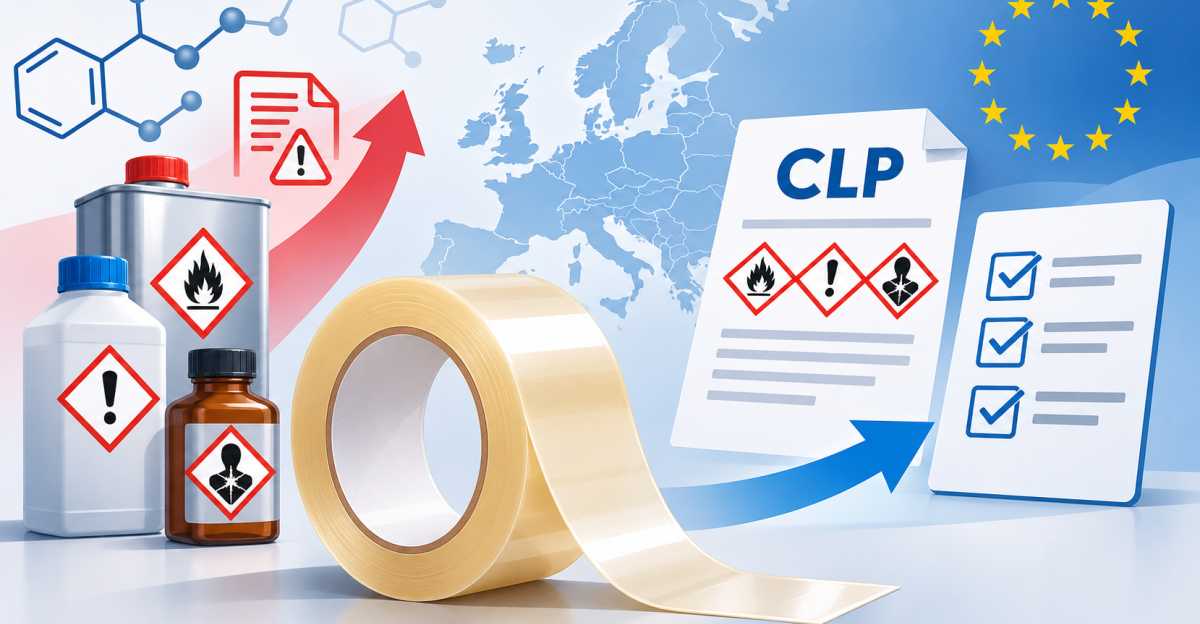
New hazard-classification requirements reached a November milestone as the E.U. approved chemical-labelling reform, with implications for Europe’s adhesive tape value chain.
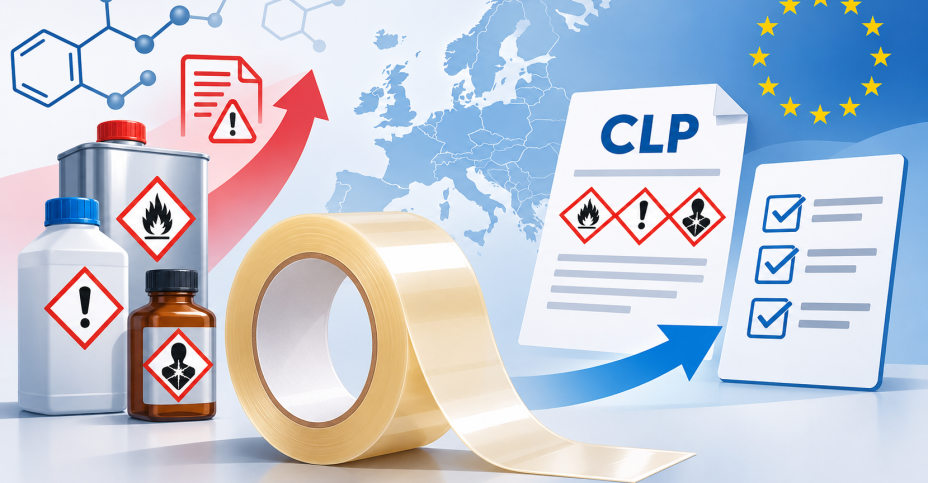
The E.U.’s chemicals regulatory framework has reached two important milestones. On 1 November 2026, a transitional deadline expired under the Classification, Labelling and Packaging (CLP) Regulation, bringing new hazard-classification requirements into effect for substances already on the market. On 19 November, the Council formally adopted Chemicals Omnibus VI, a separate package designed to simplify aspects of chemical labelling and reduce administrative burdens.
The developments concern different obligations. The new hazard classes already apply, while the adopted but not yet effective simplification measures address other parts of the CLP framework. They do not postpone existing classification deadlines.
New classifications, changing requirements
Introduced under Commission Delegated Regulation (EU) 2023/707, the new hazard classes address endocrine disruption and chemicals that persist, accumulate or remain mobile in the environment. Their introduction expands the range of chemical properties considered under CLP, with different transitional arrangements for substances and mixtures.
Following a provisional agreement in June and European Parliament approval on 22 October, the Council gave its final approval to Chemicals Omnibus VI on 19 November. The reforms are intended to make selected labelling requirements more proportionate while maintaining health and environmental protections. As of 27 November, publication in the Official Journal remained pending; the new regulation will enter into force 20 days after publication, with different application dates for individual provisions.
What this means for the tape industry
The developments are relevant throughout the adhesive tape value chain, from chemical raw-material suppliers and adhesive formulators to tape manufacturers and converters. Although finished adhesive tapes are generally treated as articles rather than chemical mixtures under REACH, changes to upstream chemical classifications can affect manufacturing operations, supplier documentation and customer information.
For companies, the immediate challenge is distinguishing obligations already in force from those subject to transitional arrangements and preparing for simplification measures that have been adopted but are not yet applicable.
Afera’s latest Members-only Member Brief, CLP hazard-class deadline passes as E.U. labelling reform advances, examines these distinctions in detail, covering regulatory deadlines, implications for different parts of the tape value chain and practical compliance considerations.
Afera’s Regulatory Affairs Working Group (RAWG) continues monitoring CLP and REACH developments affecting the industry. Members with implementation questions or relevant company experience can contact regulatoryaffairs@afera.com.
Further information