-
- News
- Login
- Contact
-
Follow us on
LinkedIn - Sign up for newsletter

Follow us on
LinkedIn
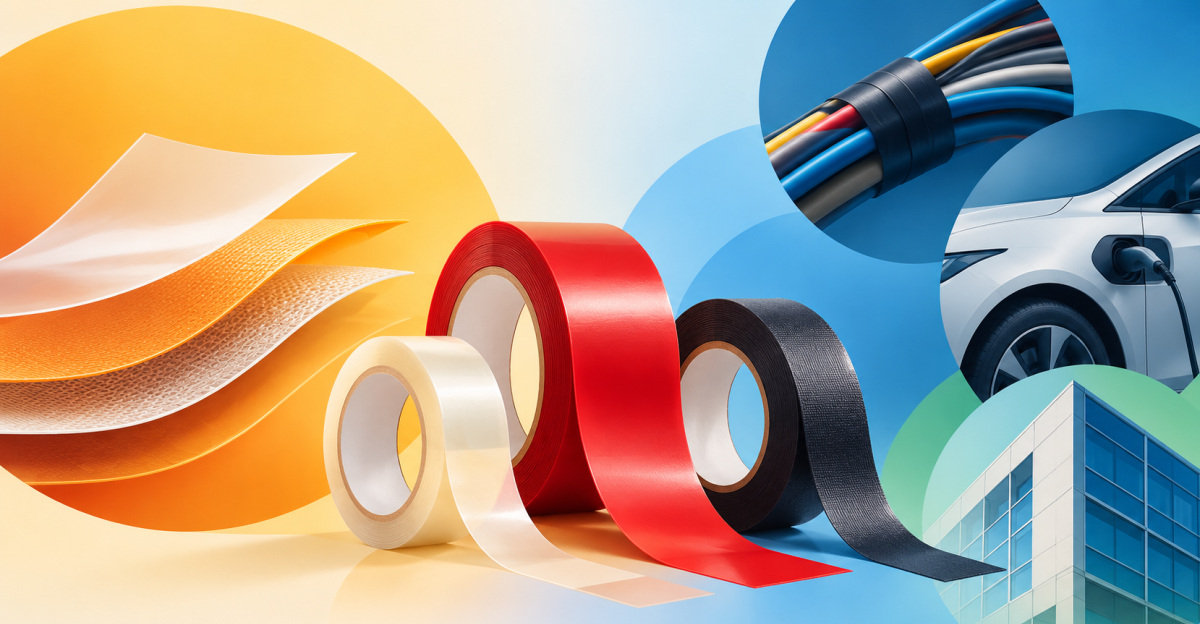
Two regulatory tracks sharpen the focus on plasticised backings, flame-retardant additives and the information moving through the European adhesive tape value chain.
Plasticisers in polymer backings and flame retardants in specialised formulations are attracting renewed regulatory scrutiny. A European proposal to classify a wider group of phthalates and fresh progress towards possible global controls on two brominated flame retardants could have implications for material selection, product compliance and supply-chain transparency.
Phthalates: Group classification moves through ECHA
France's Agency for Food, Environmental and Occupational Health & Safety (ANSES) has proposed harmonised classification of a wider group of medium-chain ortho-phthalate esters under the E.U.'s Classification, Labelling and Packaging (CLP) Regulation. The approach could bring more than 40 phthalates within the scope of reproductive toxicity and endocrine-disruption classifications, including substances not currently classified for all these hazards.
The proposal covers reproductive toxicity Category 1B and endocrine disruption Category 1 for both human health and the environment. It also introduces a cumulative approach to classifying mixtures containing several phthalates within the group, reflecting their potentially additive effects.
Following the initial public consultation from 26 January to 27 March 2026, the European Chemicals Agency (ECHA) conducted a targeted consultation from 24 August to 4 September, focused specifically on the proposed group entry name. The dossier is now undergoing assessment by ECHA's Committee for Risk Assessment (RAC), whose opinion will inform any subsequent European Commission decision.
For adhesive tape manufacturers, the relevance lies particularly in plasticised PVC backings, including those used in electrical insulation and certain specialised tapes, as well as potentially affected adhesive raw materials. Several phthalates are already subject to E.U. restrictions, but a broader harmonised classification could extend classification and labelling consequences for substances and mixtures. Manufacturers should establish which plasticisers their suppliers use and whether these fall within the proposed group definition.
Flame retardants: DBDPE and TBPH advance towards possible global controls
Meanwhile, two brominated flame retardants have cleared the initial screening stage under the Stockholm Convention on Persistent Organic Pollutants (POPs).
At its 22nd meeting in Rome, 21–25 September 2026, the Convention's POPs Review Committee (POPRC) concluded that decabromodiphenylethane (DBDPE), nominated by Norway together with a related substance, and bis(2-ethylhexyl) tetrabromophthalate (TBPH), nominated by the E.U. together with its isomers, satisfied the screening criteria under Annex D.
Both will now undergo more detailed risk assessment under Annex E, with draft risk profiles expected to be considered at POPRC-23 in October 2027. Further assessment of potential control measures, alternatives and exemptions would follow if the substances advance. A decision on possible Stockholm Convention listing is not expected before 2029 at the earliest in the case of TBPH.
The regulatory implications extend beyond the Convention. Both substances are already included on ECHA's REACH Candidate List because of their very persistent and very bioaccumulative properties: TBPH since January 2023 and DBDPE since November 2025. Existing supply-chain communication and other relevant REACH obligations therefore already apply where their legal conditions are met. ECHA is also undertaking parallel work on possible E.U. restrictions covering certain aromatic brominated flame retardants.
What this means for the tape value chain
DBDPE and TBPH have documented applications in polymer materials, while reported uses also extend to adhesives and sealants. TBPH has additionally been associated with flexible PVC, films and sheeting. Although these applications establish potential relevance to materials used in the adhesive tape industry, they do not confirm the presence of either substance in particular tape products.
For manufacturers and their suppliers, the immediate priority is therefore substance identification rather than assuming exposure. This means checking relevant backing materials, flame-retardant additives and adhesive formulations, particularly where electrical, automotive or construction applications impose demanding fire-performance requirements.
There is also an opportunity for industry input. The Stockholm Convention Secretariat has invited information by 4 December 2026 to support the next assessment stage. Evidence on substance uses, potential alternatives, socioeconomic impacts and possible exemptions could help ensure that industrial applications are properly considered. Companies wishing to contribute feedback through Afera should contact the association at regulatoryaffairs@afera.com ahead of the deadline.
For Afera's Members, both developments reinforce the importance of knowing what enters a tape construction, what existing obligations apply and where future material substitution may become necessary.
Further information